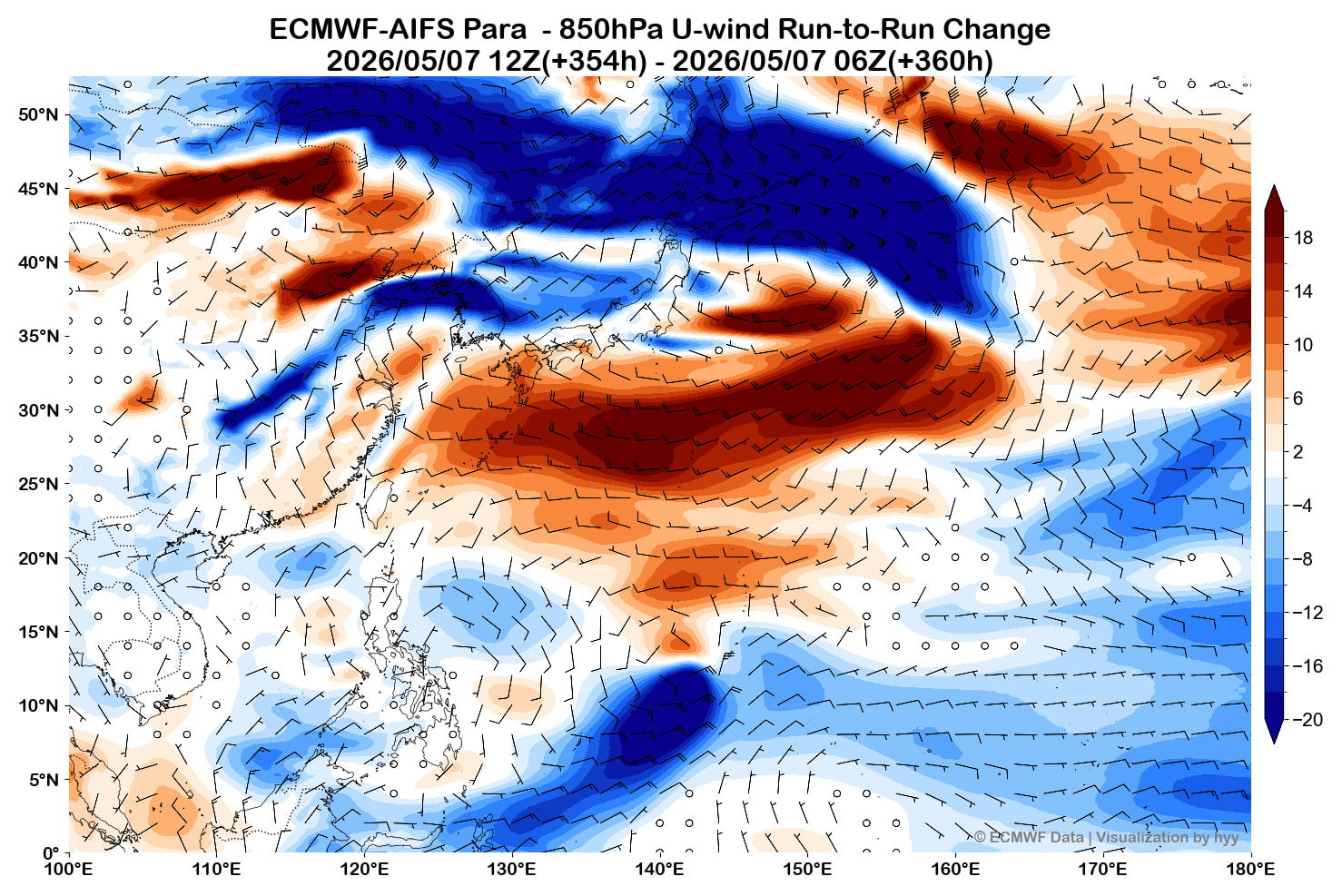
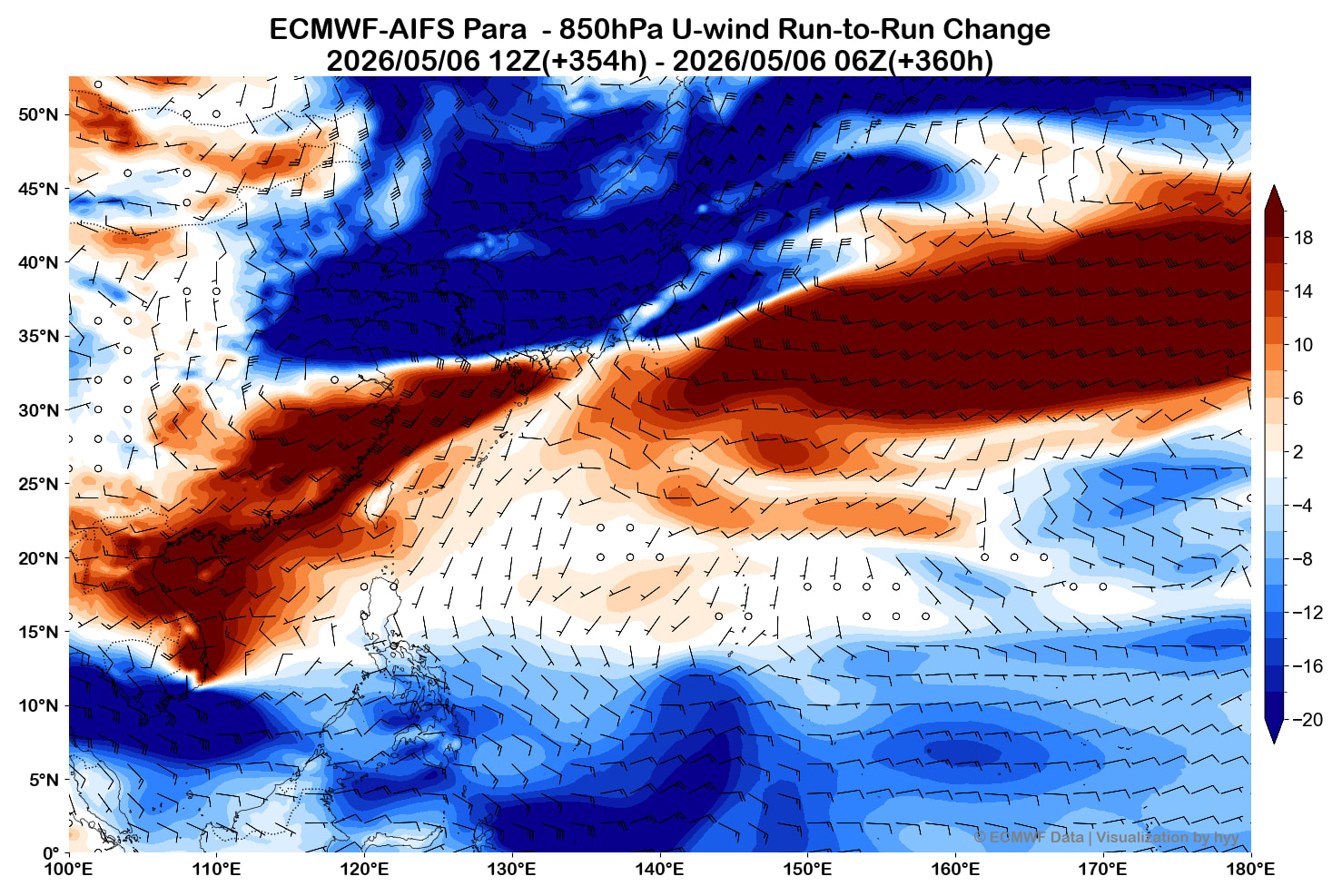
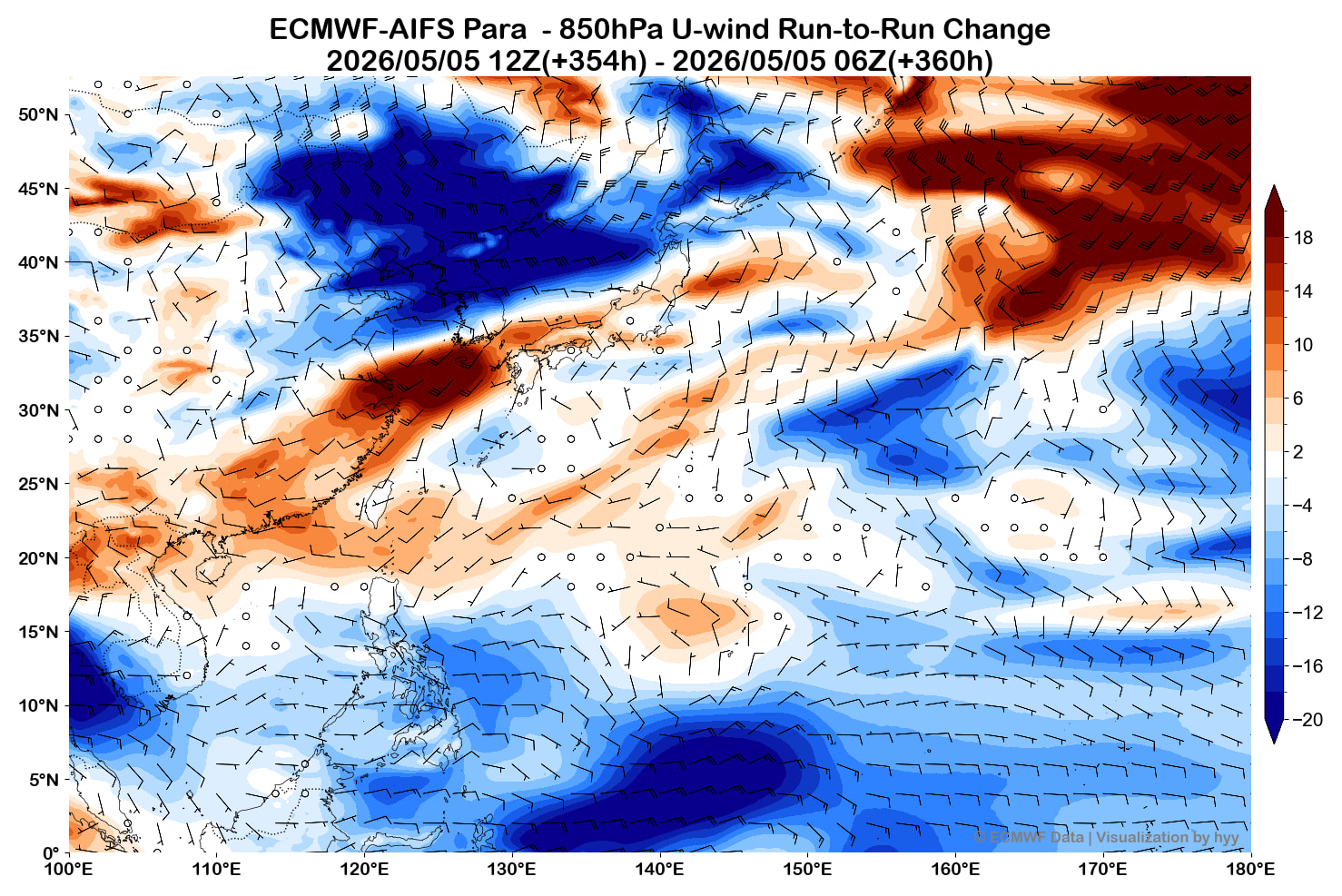
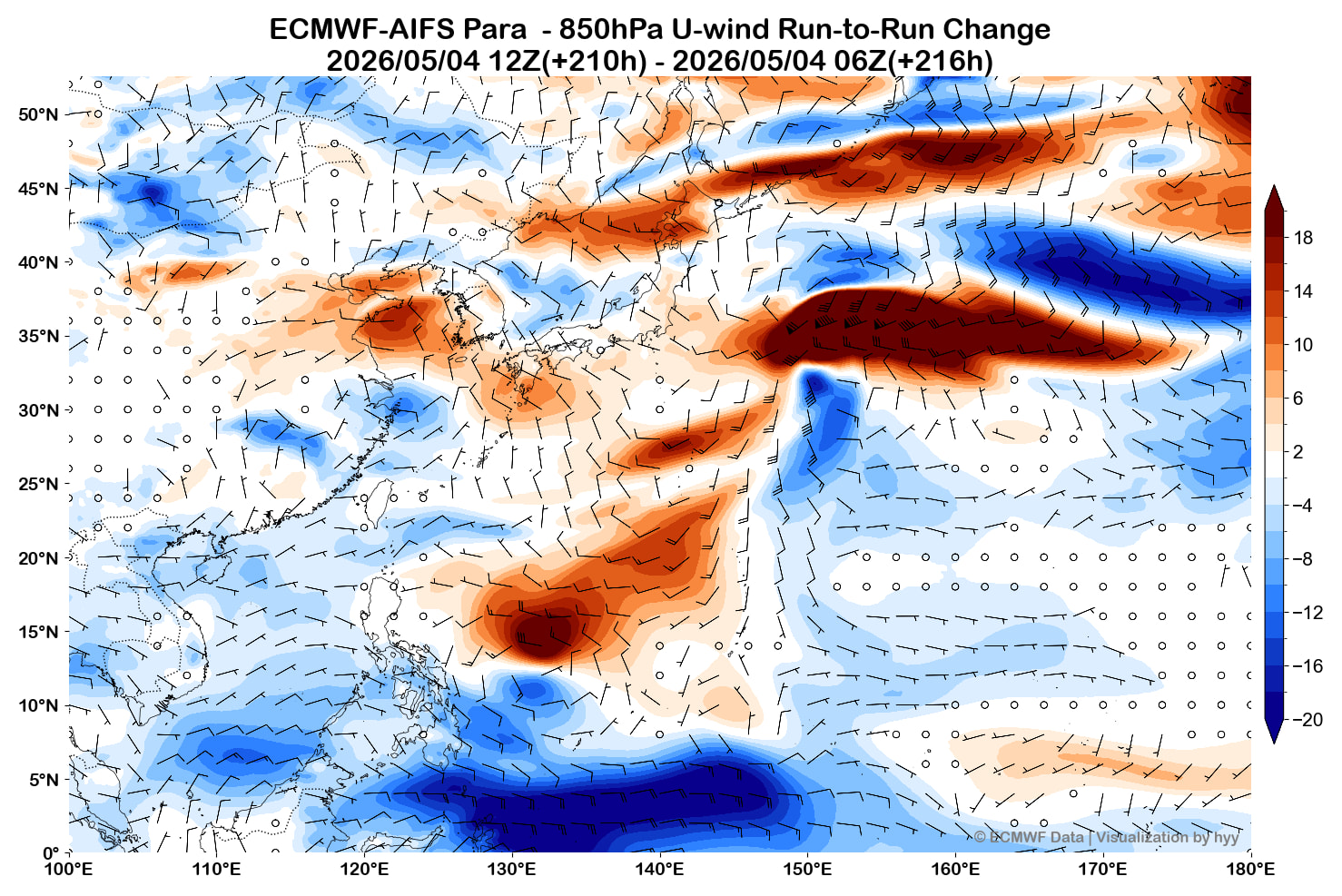
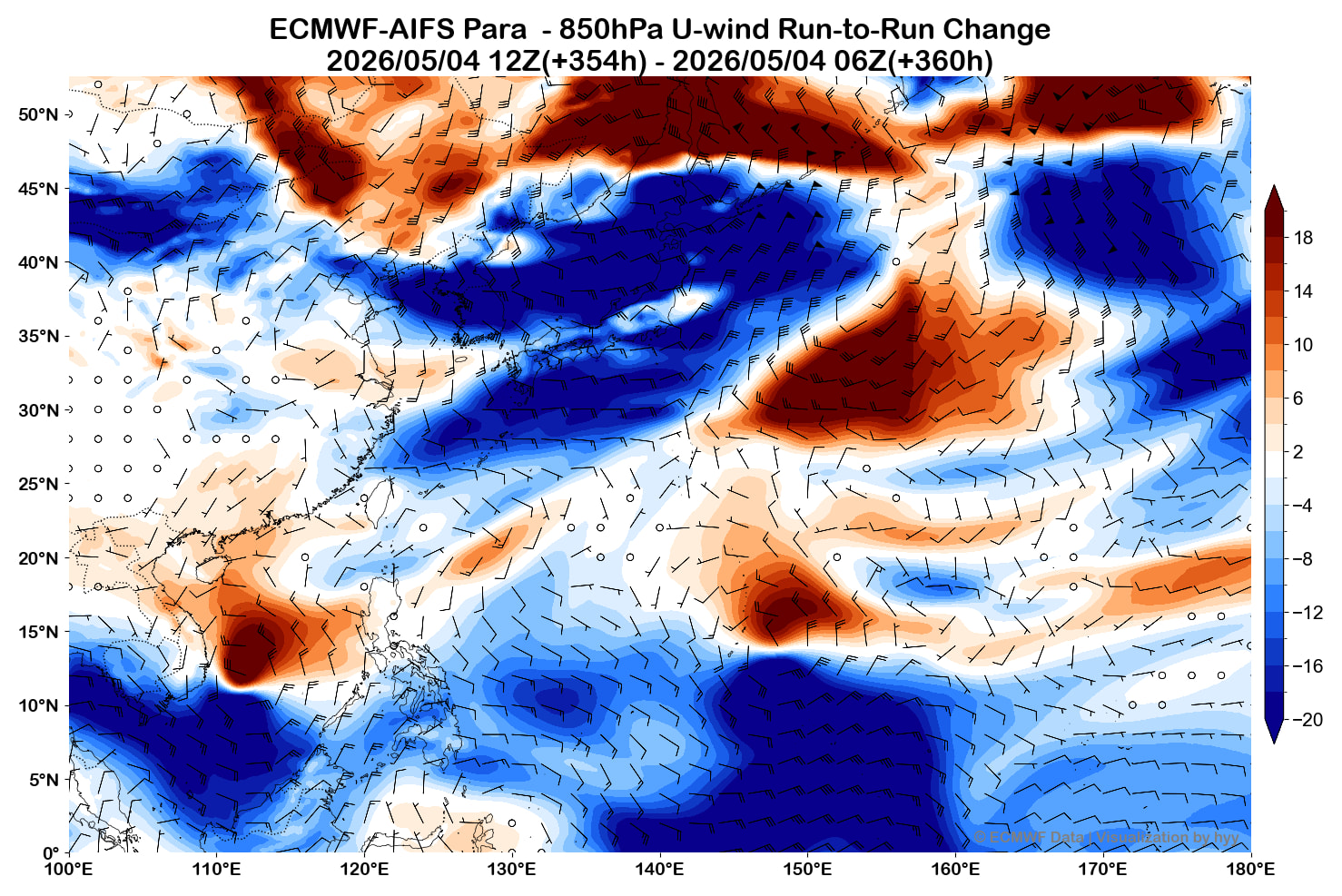
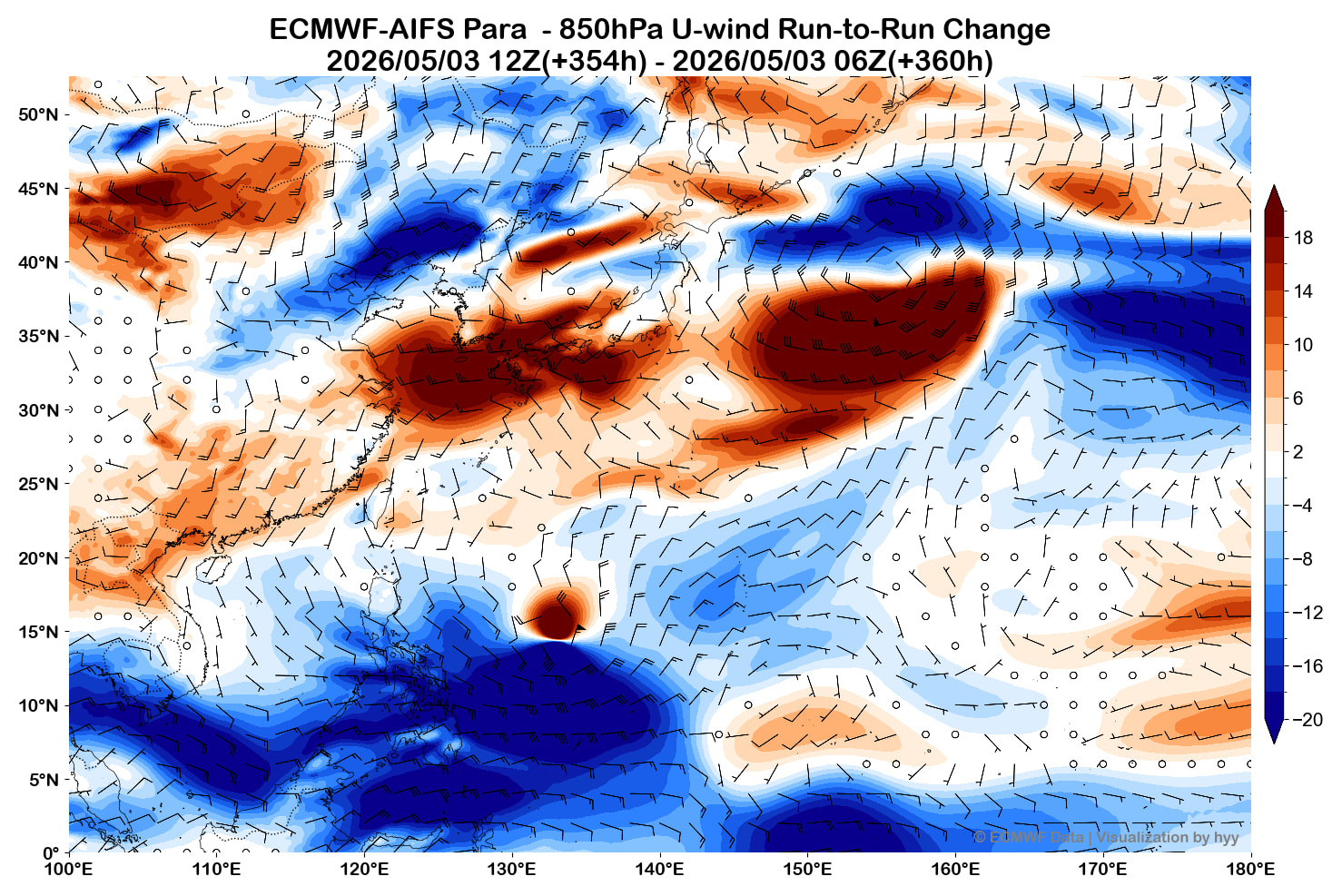
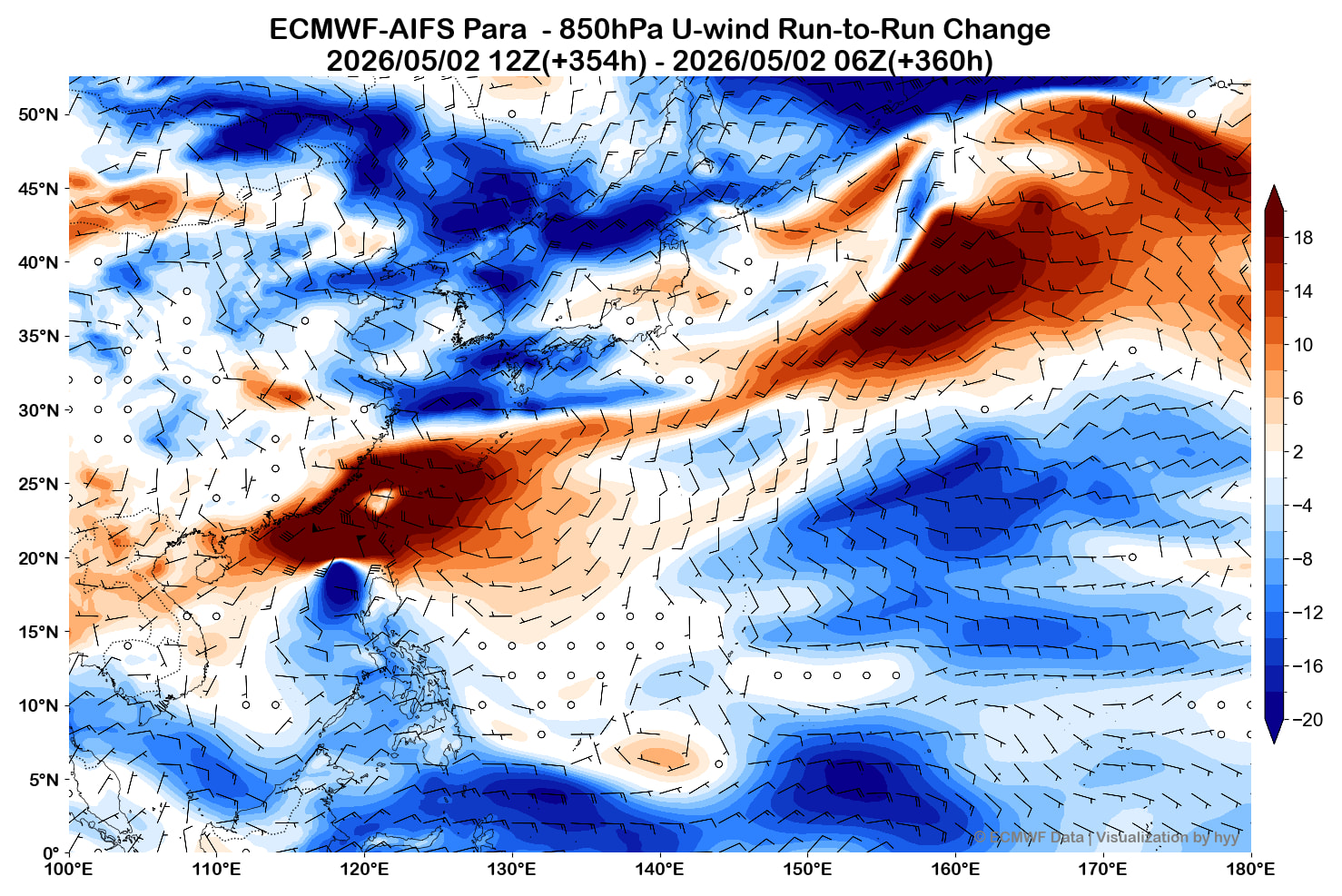
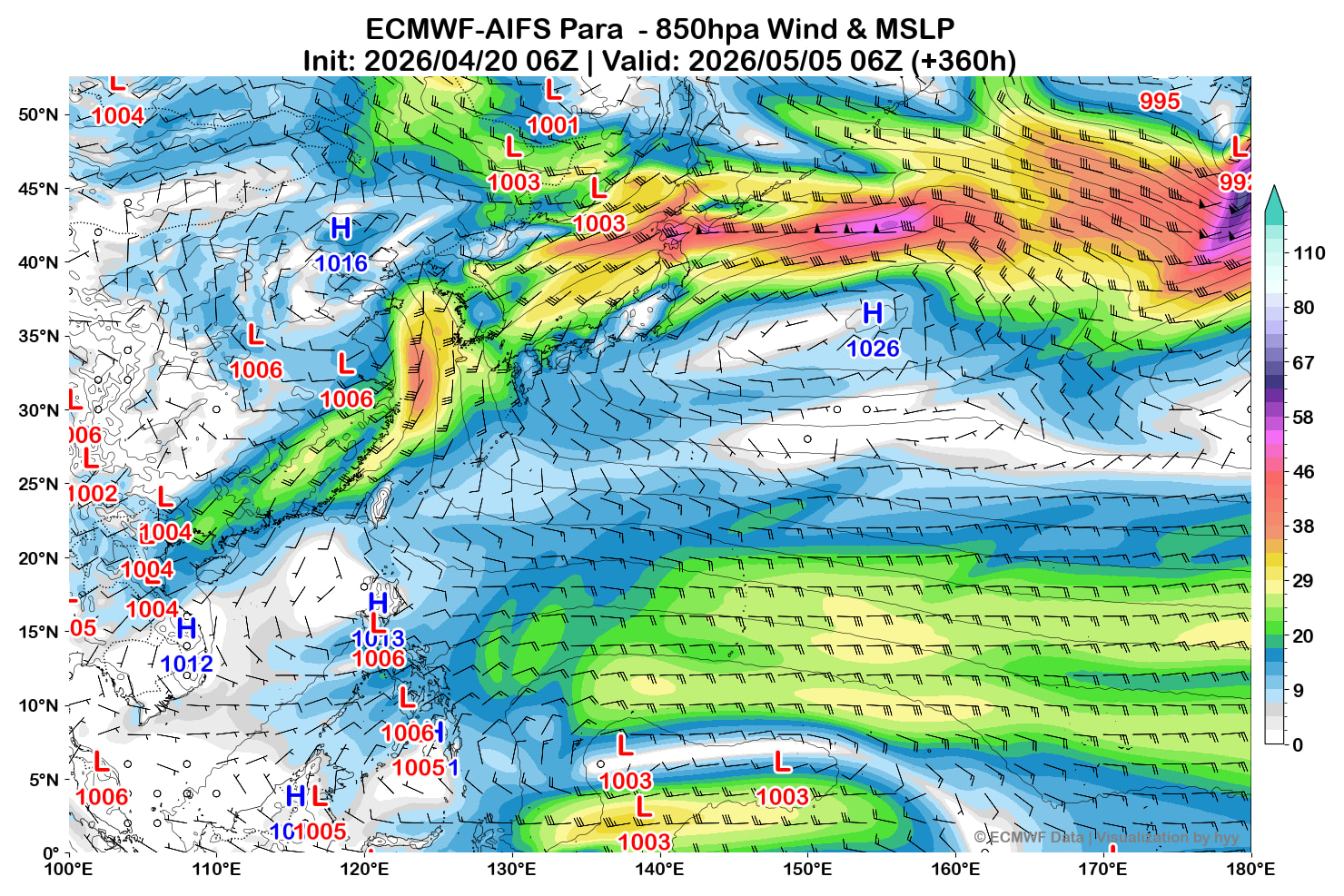
Hello, while visualizing the test data for AIFS single v2 on the OpenData webpage, we unexpectedly discovered that the new AIFS model’s 06z and 12z showed abnormal differences in the simulation of the Northwest Pacific in the long term. 06z consistently reported strong westerly winds and typhoon activity in the low latitudes of the Northwest Pacific in the long term, while 12z was occupied by very strong easterly trade winds for several consecutive days (corresponding to the same situation in the ensemble forecast). The large difference is so significant that it is difficult to believe that it is due to long-term errors (the previous AIFS model has always been known for its stability and smoothness). I am curious whether it is caused by a model bug or if the new model has other biases? Thank you for your response
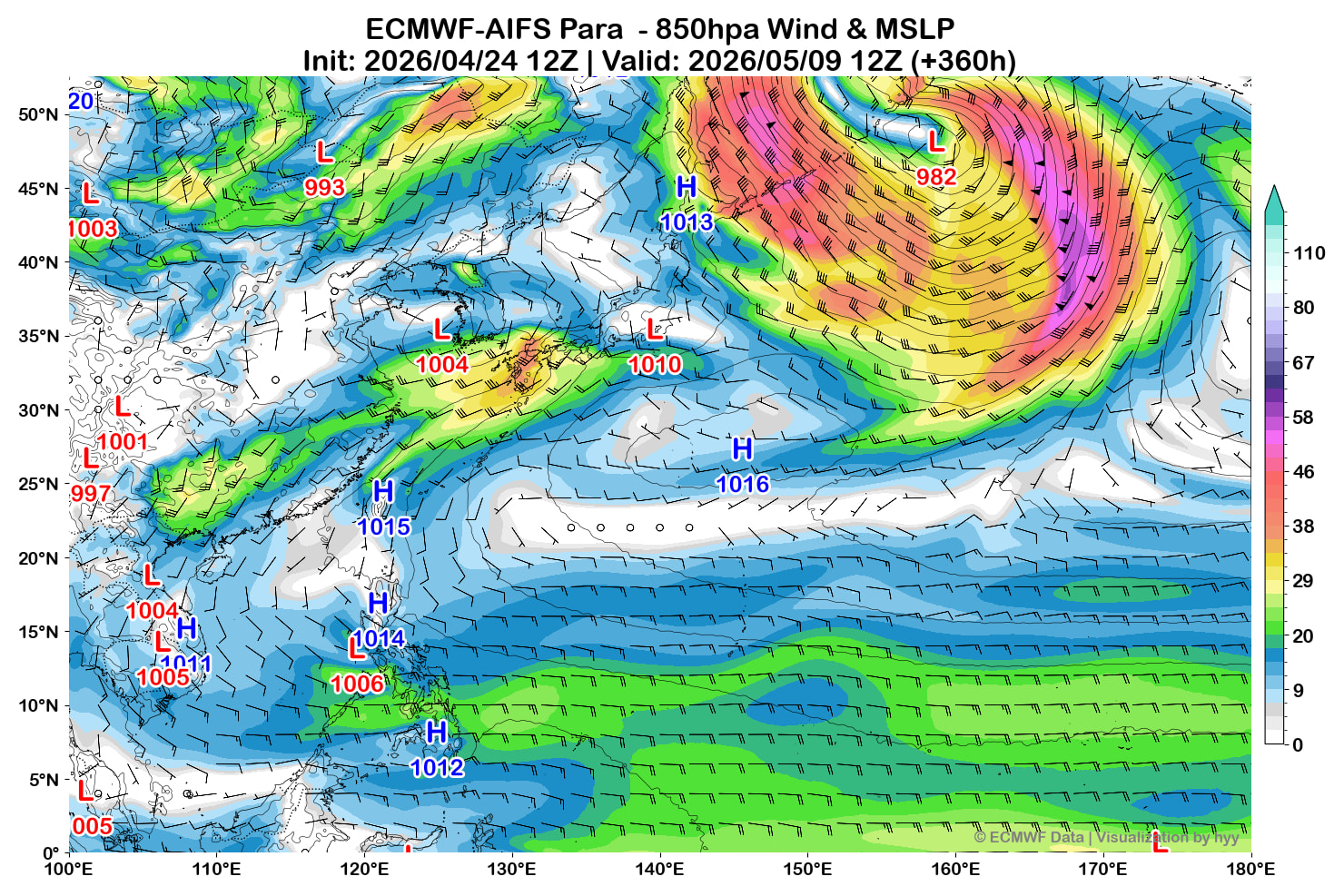
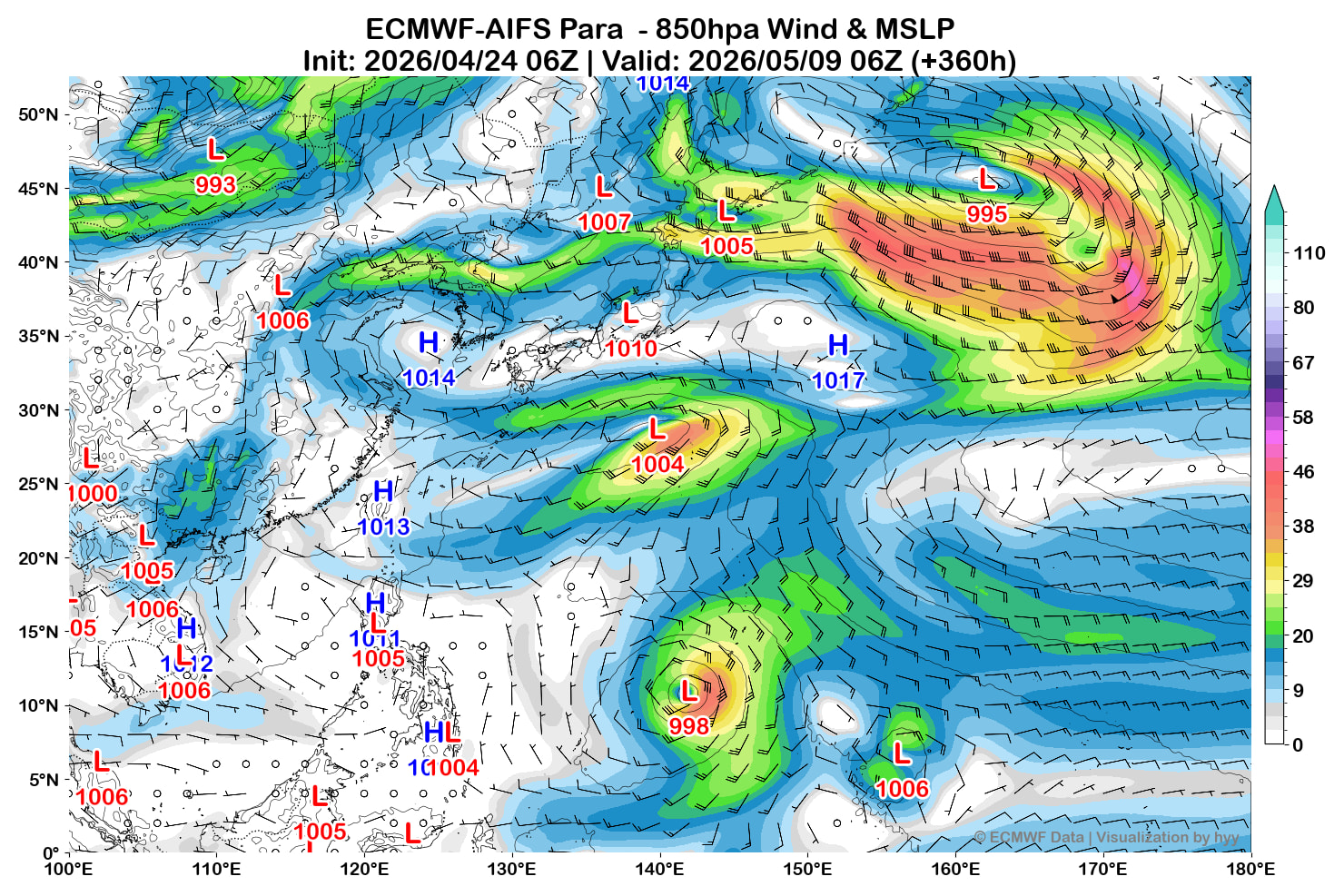
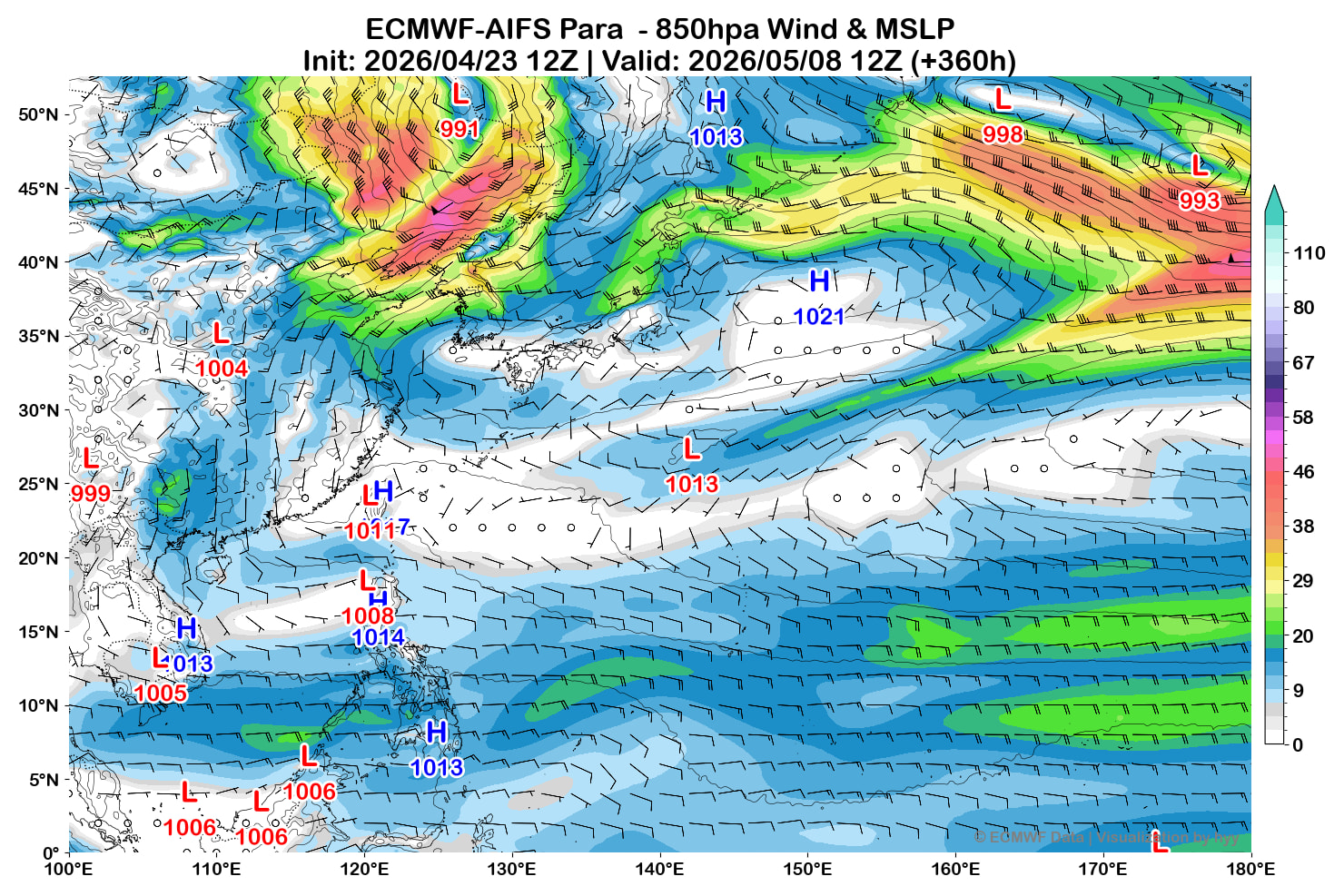
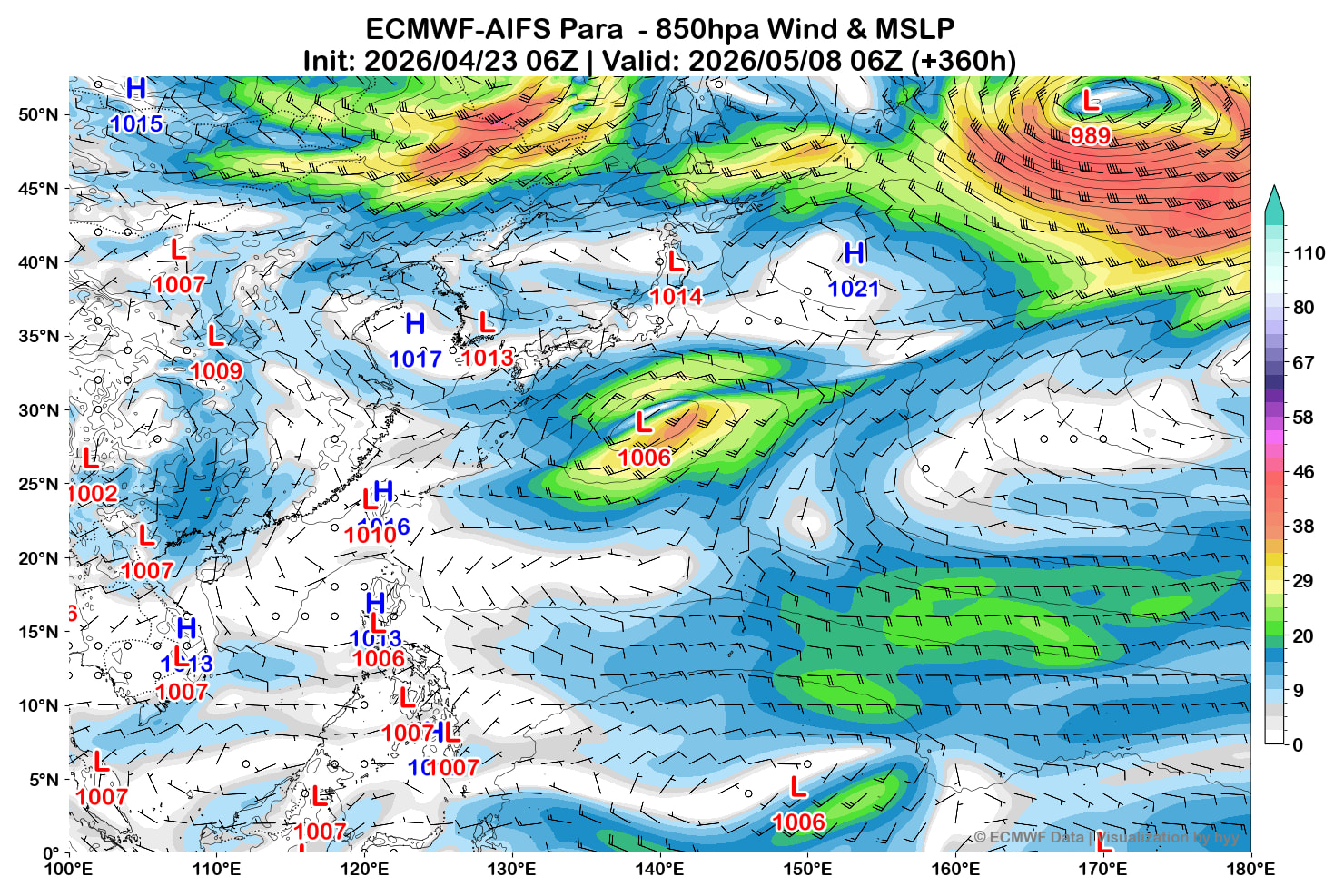
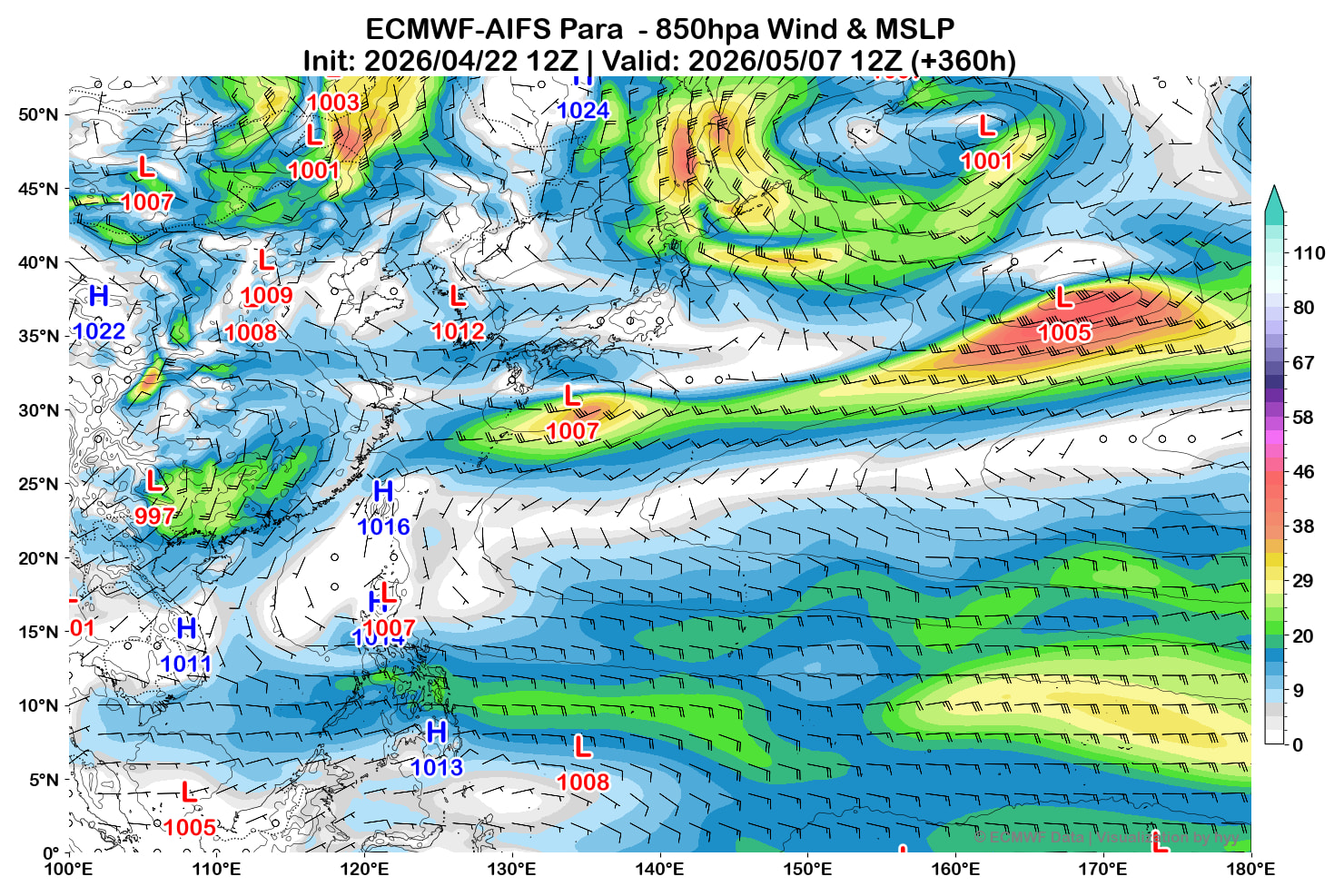
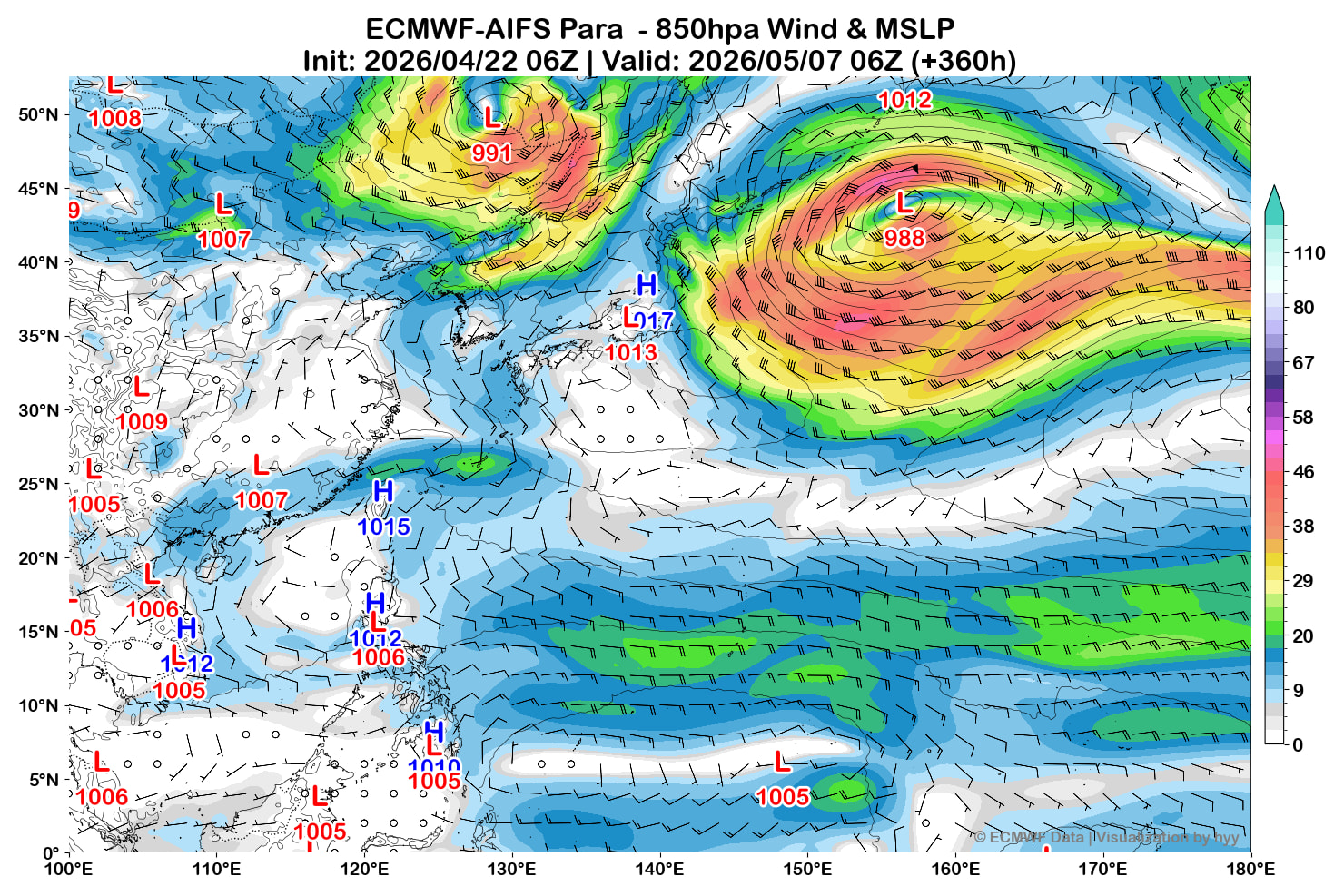
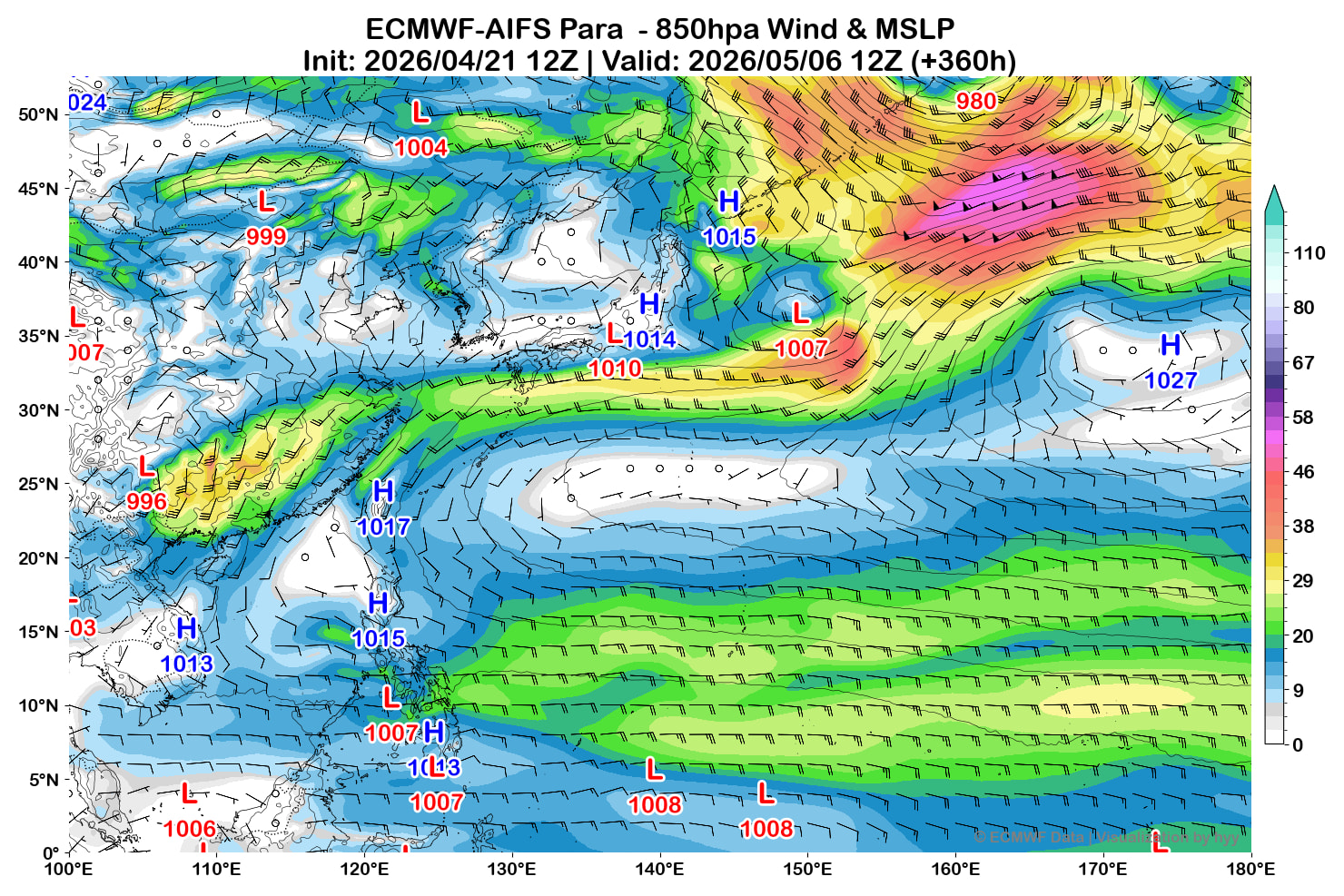
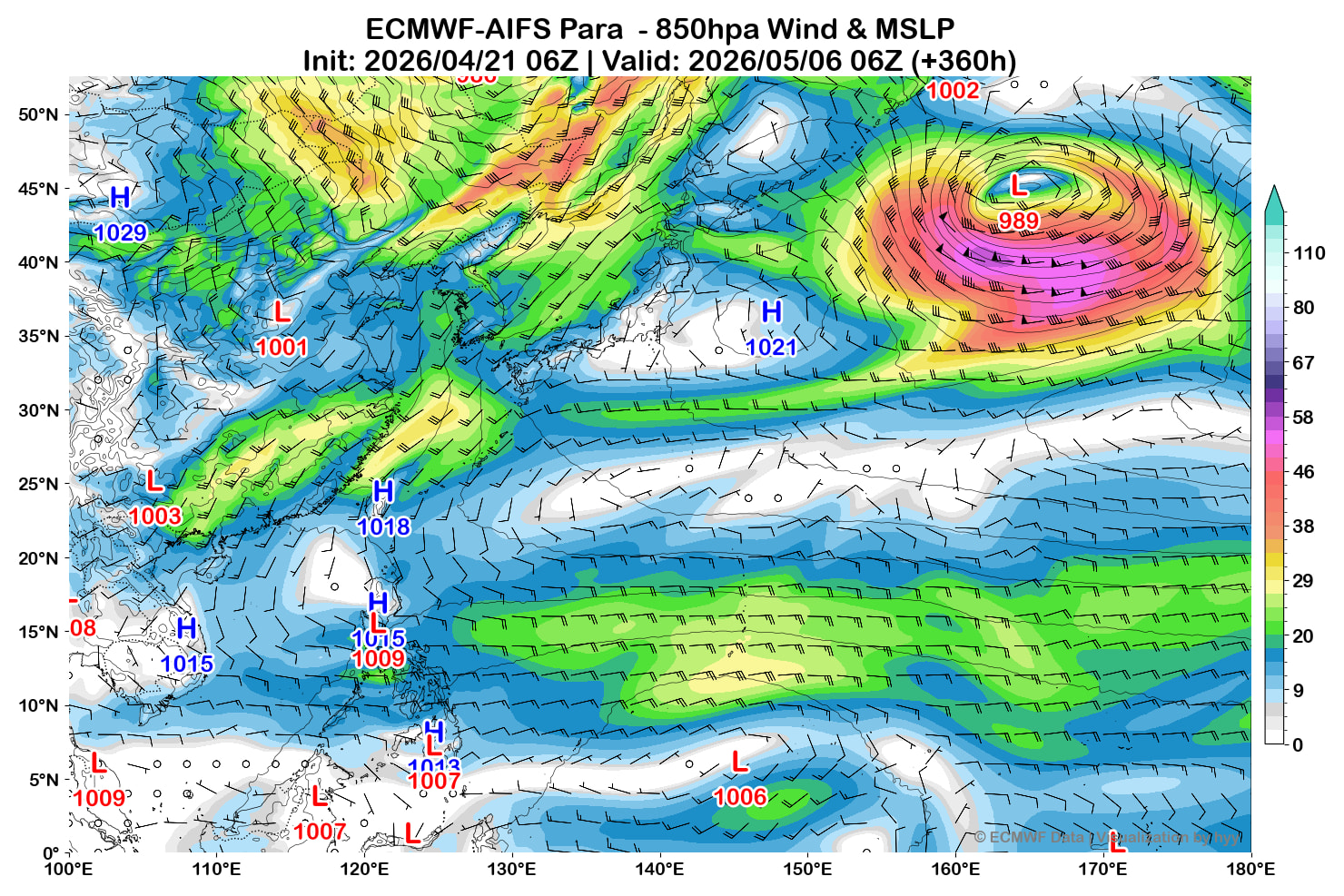
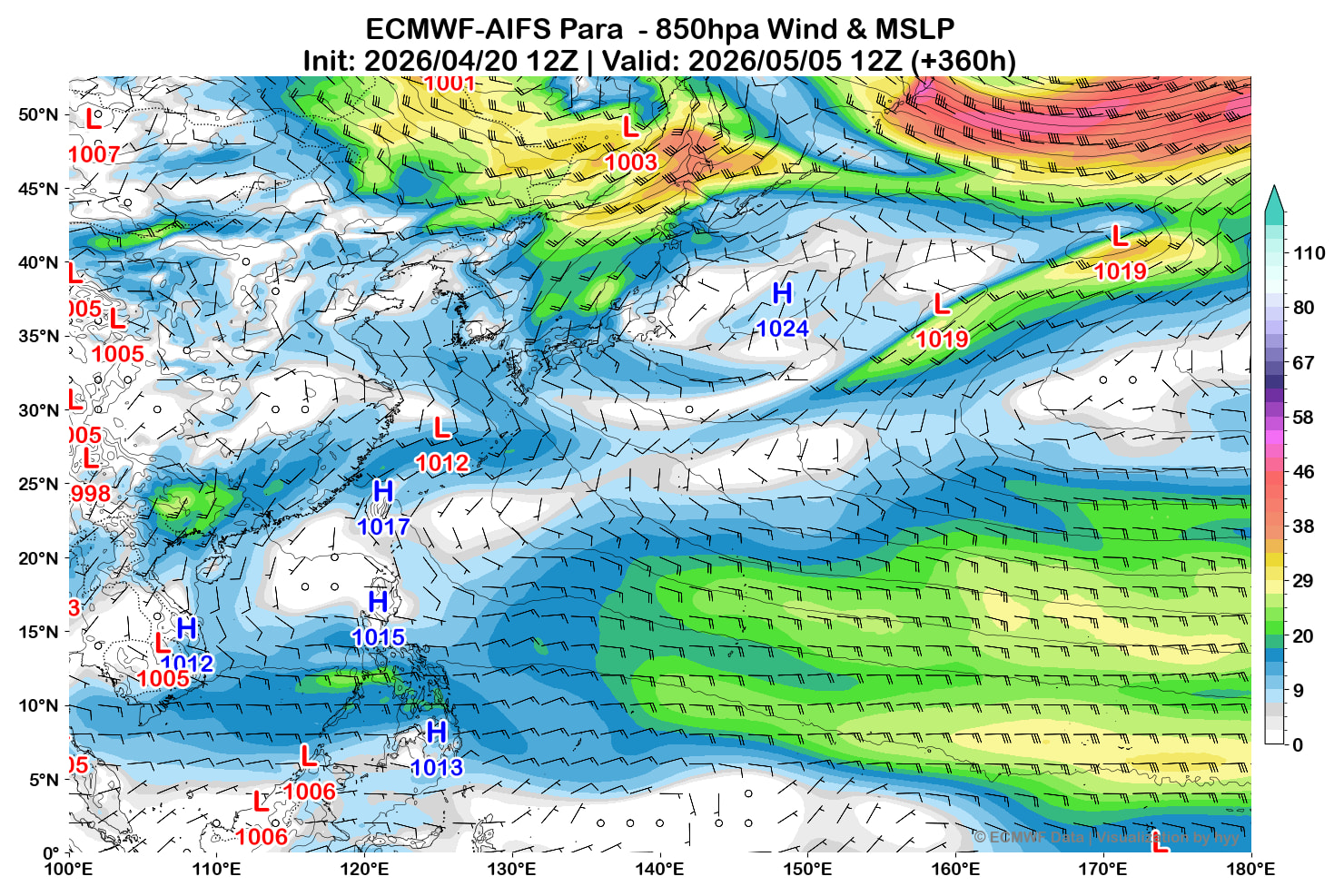
Assessing the uncertainty of deterministic forecasts at longer lead times can be quite challenging due to the increased forecast uncertainty.
We have taken a closer look at the behaviour you highlighted over the western tropical Pacific, for forecasts valid around 9 May. While there is some variability in the AIFS single v2 runs, this does not appear to be outside the range of behaviour seen in the current AIFS single or ensemble model. However, we have noted that the AIFS-ENS v2 model does show some more extreme outliers in this region, including instances of stronger westerly winds. We will continue to investigate and appreciate you bringing this to our attention.
In future versions of the AIFS we will introduce hindcasts to provide a climatology, to enable users to better understand long-term behaviour.
Dear ECMWF, I noticed that you officially launched the new IFS and AIFS forecasting systems on May 12th, and I also read your blog on the official website. However, when visualizing these products, I really noticed a significant problem - it’s not just that they are not smooth, the forecast results for different times of the day are basically irrelevant at a slightly farther time (especially for 06z and 12z, especially in tropical regions), as if there is an internal bias, and I don’t know if it’s caused by the optimization of the initial field; Before the update, the AIFS was much better. Although forecast errors were inevitable, the tropical region remained relatively smooth from various time periods and could reflect long-term signals well (such as MJO, monsoon trough activity, etc.). As a result, the availability of the updated AIFS forecast results in tropical regions was very poor, and the stability of other AI generated from the EC initial field was greatly reduced. It is unknown how ECMWF considers this issue? I hope you can seriously consider it. Thank you very much!